Bankruptcy FAQ — Chicago & Cook County
Bankruptcy FAQ — Chicago & Cook County
If you are considering bankruptcy, you probably have a lot of questions. Below are answers to the questions Attorney Veronica D. Joyner hears most often from clients in Chicago and Cook County. If you don't see your question here, call or text us at 312-332-9001 for a free consultation.
What is bankruptcy and how does it work?
Bankruptcy is a federal legal process that allows individuals and businesses to eliminate or restructure debt under the protection of the federal courts. When you file, an automatic stay immediately stops most collection actions — including foreclosure, wage garnishment, and creditor calls. Depending on the chapter you file, your debts may be discharged entirely or reorganized into a manageable repayment plan.
What is the difference between Chapter 7 and Chapter 13?
Chapter 7 is a liquidation bankruptcy that eliminates most unsecured debts (credit cards, medical bills, personal loans) within a few months. Chapter 13 is a reorganization bankruptcy that lets you keep your property and catch up on mortgage arrears or other secured debts through a 3–5 year repayment plan. Chapter 7 is faster but has income eligibility requirements; Chapter 13 is better if you have assets to protect or are behind on your mortgage.
Will bankruptcy stop a foreclosure?
Yes — filing for bankruptcy triggers the automatic stay, which immediately halts foreclosure proceedings. Chapter 13 is particularly powerful for homeowners because it allows you to catch up on missed mortgage payments over time while keeping your home. Chapter 7 can also delay foreclosure, but it does not provide a mechanism to cure arrears.
Will bankruptcy stop wage garnishment?
Yes. The automatic stay that goes into effect the moment you file stops most wage garnishments immediately. Your employer must stop withholding the garnished amount as soon as they receive notice of the bankruptcy filing.
What debts can be discharged in bankruptcy?
Most unsecured debts can be discharged, including credit card balances, medical bills, personal loans, utility arrears, and certain older income tax debts. Debts that generally cannot be discharged include student loans (with limited exceptions), recent income taxes, child support, alimony, and debts arising from fraud or willful misconduct.
How will bankruptcy affect my credit?
A bankruptcy filing will appear on your credit report — Chapter 7 for up to 10 years and Chapter 13 for up to 7 years. However, many clients find that their credit score actually improves over time after bankruptcy because their debt-to-income ratio improves and they can begin rebuilding credit immediately. Many clients qualify for secured credit cards and auto loans within 1–2 years of discharge.
Do I have to go to court?
Most bankruptcy cases require only one brief court appearance — the 341 Meeting of Creditors, which typically lasts 5–10 minutes. Attorney Joyner will prepare you thoroughly and attend with you. In most Chapter 7 cases, creditors do not appear at this meeting.
How long does bankruptcy take?
A Chapter 7 case typically takes 3–6 months from filing to discharge. A Chapter 13 case lasts 3–5 years, which is the length of the repayment plan. Emergency filings can be completed in as little as one day when foreclosure or garnishment is imminent.
Can I keep my car and home if I file for bankruptcy?
In many cases, yes. Illinois bankruptcy exemptions protect a significant amount of home equity, vehicle equity, retirement accounts, household goods, and other property. Attorney Joyner will review your specific assets and advise you on what you can protect before you file.
How do I get started?
Call or text Joyner Law Office at 312-332-9001 to schedule your free initial consultation. Attorney Joyner will review your financial situation, explain your options, and help you decide whether bankruptcy is the right path forward.
Still have questions? Call or text us for a FREE consultation.
312-332-9001Se Habla Español

Call or text today to set up a FREE initial consultation.


From your cell: Text Now | Call Now
Facsimile: 312-332-9003
GET DIRECTIONS TO OUR LOOP OFFICE LOCATION IN DOWNTOWN CHICAGO
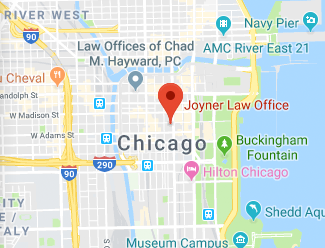 Joyner Law Office
120 South State Street
Chicago, Illinois 60603